Factory-sealed or original reels with readable tags and intact packaging
LABELS, FOOTAGE, CONDITION & HANDLING
WIRE REEL BUYERS
Prepare full and partial wire reels for a buyer review by documenting tags, printed legends, footage, reel condition, storage, handling, and loading access.
SELL SURPLUS WIRE
SHOW US THE MATERIAL
Send photos, specifications, quantity, condition, pickup location, access, and timing. Approved purchases include payment terms confirmed before pickup and agreed freight responsibilities paid by the buyer.
CALL OR TEXT A WIRE BUYER954-740-1983
THE REEL IS PART OF THE INVENTORY
DOCUMENT BOTH THE CABLE AND THE PACKAGE THAT HOLDS IT
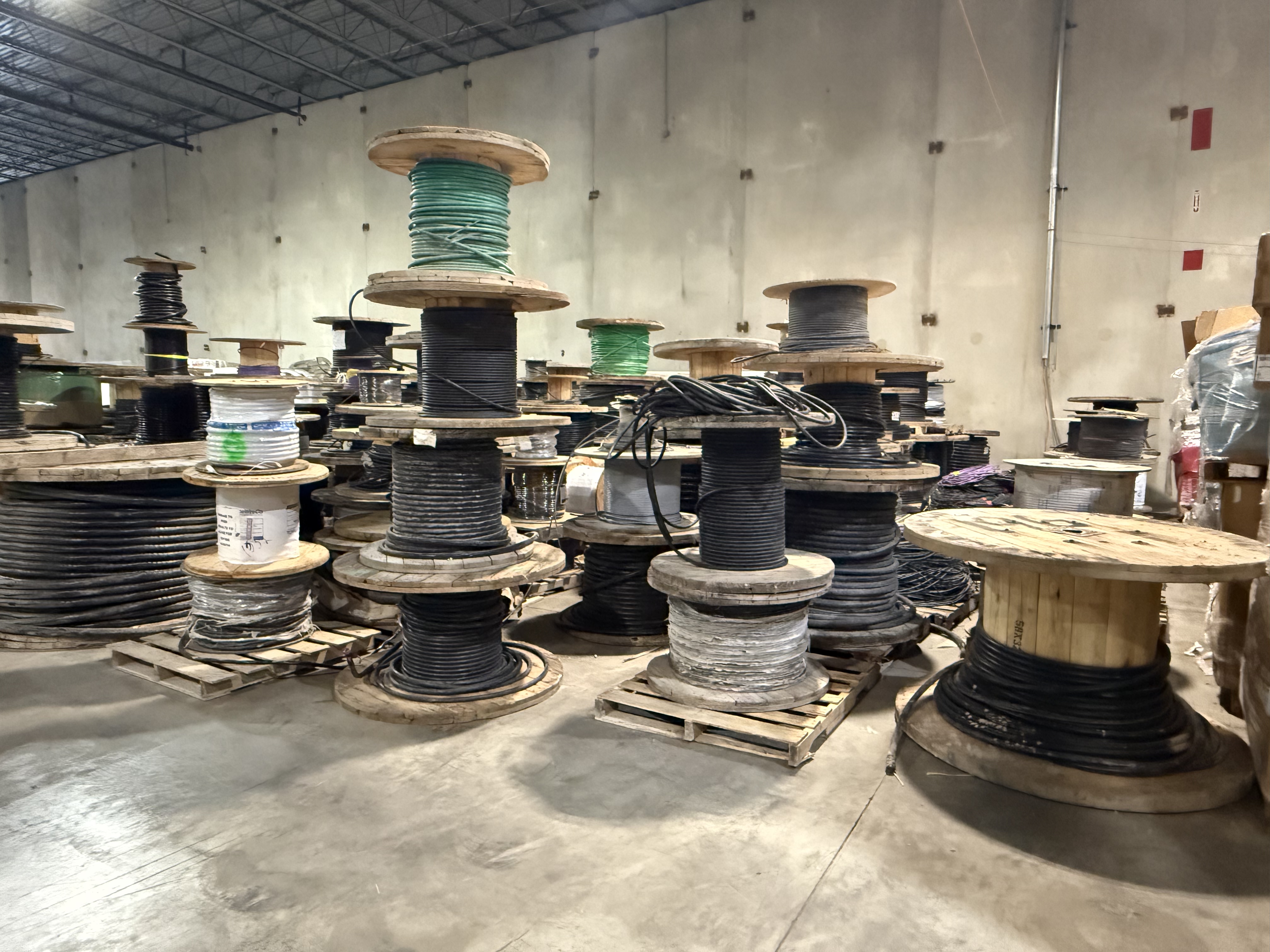
A reel can preserve cable identity, protect usable length, and make handling practical, but only when its condition and markings are visible. Photograph each different tag, the cable legend, both reel flanges, the remaining wrap, conductor ends, and any broken boards, protruding fasteners, water exposure, crushed layers, or field notes. Assign a simple reel number so photos and inventory rows remain connected.
Full factory reels, opened reels, partial reels, and re-reel material should not be described the same way. State how remaining footage was determined: printed counter marks, start and end footage, purchase records, measured dimensions, or a clearly identified estimate. A buyer must understand whether the footage is verified, calculated, or unknown before evaluating usable length.
COMMERCIAL SELLER FIT
REEL CONDITIONS TO SEPARATE
Opened project-overrun reels with documented remaining footage
Re-reel cable whose original identity follows the transferred material
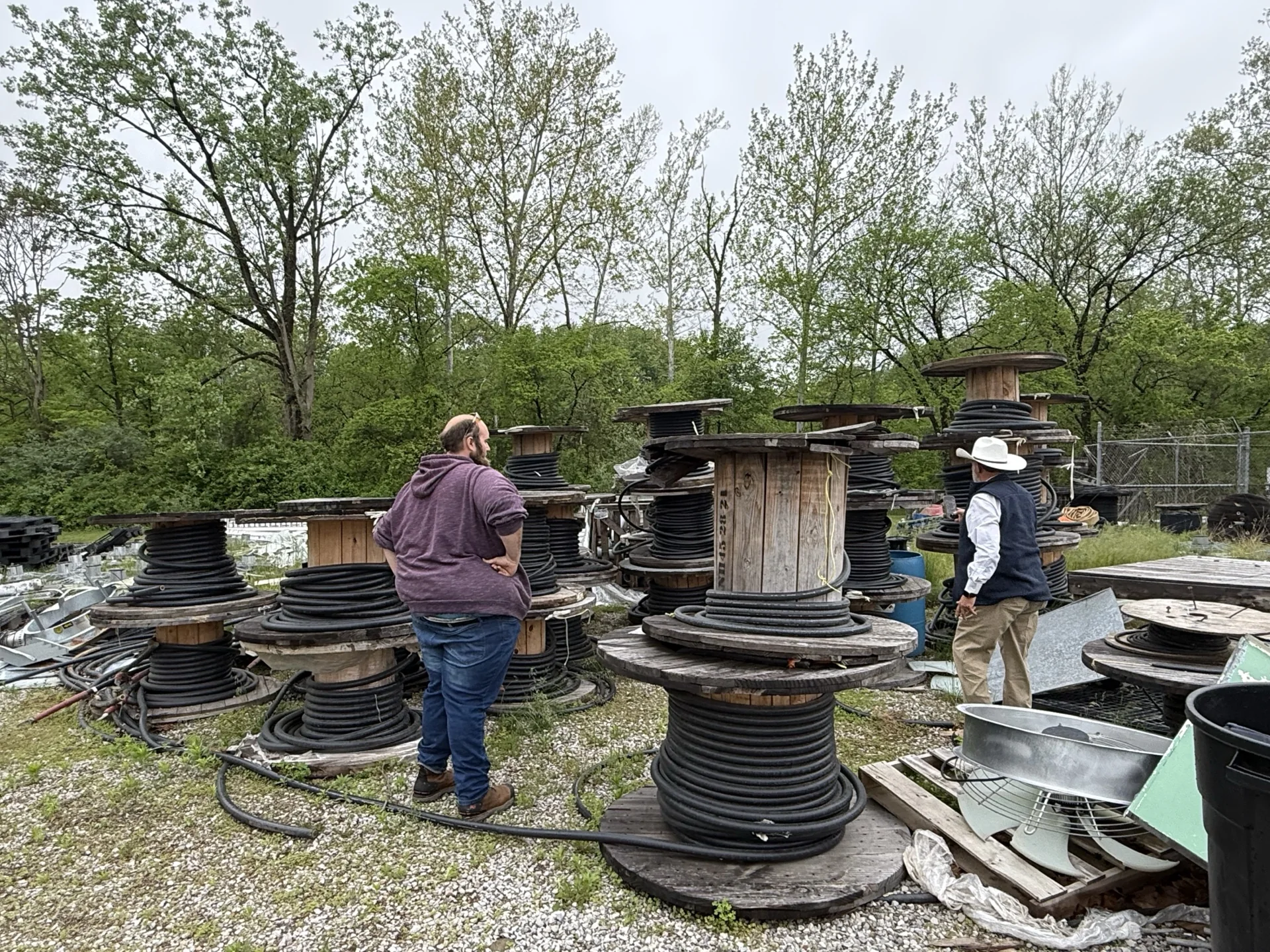
Damaged, weathered, leaning, broken, or inaccessible reels requiring special handling
DIRECT PURCHASE QUALIFICATION
FOOTAGE AND CONDITION MUST BE EXPLAINABLE
Useful reels show enough cable identity, quantity, and condition to support a commercial review. Record conductor, size, insulation or jacket, voltage class, number of conductors, and any catalog or specification code. For partial reels, photograph footage marks and explain calculations. If several reels match, show the evidence rather than assuming every reel contains the same material.
A reel tag alone does not prove the remaining cable matches the original package. Loose tails, spliced material, mixed layers, severe flange damage, water intrusion, missing ends, or unknown footage can limit a direct review. Never rotate, lift, band, or load a compromised reel without qualified site personnel and appropriate equipment.
PHOTOS, RECORDS & ACCESS
WIRE REEL PHOTO & HANDLING CHECKLIST
A useful submission connects each statement to current photographs, readable markings, seller-controlled records, or specific site facts. Keep unlike cable families and conditions separate.
Do not alter, strip, cut, move, or combine usable inventory solely to simplify a quote request. Preserve the evidence until a buyer explains what additional detail is needed.
DECISION & PICKUP PREPARATION
FREIGHT STARTS WITH DIMENSIONS AND ACCESS
A count of reels is not enough for transport planning. Diameter, width, weight, orientation, banding, palletization, and the method used to move each reel affect equipment selection. Describe overhead limits, soft ground, narrow gates, indoor aisles, dock height, appointment requirements, and whether the seller can stage material safely before a carrier arrives.
Keep the material stationary until the buyer confirms which reels remain under review. If a reel must be moved for photography, use the site's approved handling procedures. Pickup timing, loading responsibility, transport method, and agreed costs must be defined for the transaction; the presence of a reel does not create an automatic freight commitment.
A request starts a review. It does not guarantee a purchase, price, removal service, freight treatment, payment method, or pickup time. Any approved transaction depends on written terms for the actual material and location.
SELLER QUESTIONS
QUESTIONS ABOUT WIRE REEL BUYERS
These answers define the page's buyer-review role without creating a price, purchase, pickup, local-presence, or performance promise.
How should I estimate footage on a partial wire reel?
Use readable start and end footage marks or reliable project records when available. If footage is calculated from dimensions, identify the method and label the result as an estimate rather than a verified quantity.
Can a buyer rely on the original reel tag?
The tag is important but should be supported by current jacket printing, conductor-end photos, remaining wrap, and condition. Re-reel or mixed material requires additional explanation.
What handling details matter before freight is discussed?
Provide reel dimensions and weight, storage position, surface, aisle or gate limits, dock or ground loading, available forklift or crane capacity, and the route from the reel to the truck.